
Most Albanian small businesses have faced a cyber incident, yet few can explain what an IT risk actually is. That gap is dangerous. 62% of Albanian enterprises were targeted by supply chain attacks in 2026, with each incident averaging $45,000 in damages. If you run a business in Tiranë, Durrës, or anywhere in Albania, understanding IT risks is no longer optional. This guide breaks down what IT risks are, what types your business is most likely to face, what they cost, and what you can do about them starting today.
Table of Contents
- What are IT risks and why do they matter?
- Types of IT risks facing businesses in Albania
- How IT risks impact small and medium businesses
- How to identify and reduce IT risks in your business
- A local perspective: What most guides miss about IT risks in Albania
- Need help managing IT risks? Blad IT Solutions can support your business
- Frequently asked questions
Key Takeaways
| Point | Details |
|---|---|
| IT risks are common | Most Albanian SMBs have faced IT attacks, making risk management critical. |
| Costs can be severe | The financial impact of cyber attacks ranges from tens of thousands to millions of dollars. |
| Prioritize practical steps | Simple actions like asset inventory and training can significantly reduce IT risks. |
| Local context matters | Tailor IT risk efforts to Albanian realities rather than copying global solutions. |
What are IT risks and why do they matter?
An IT risk is any threat to your business's information systems that could affect three things: confidentiality (who sees your data), integrity (whether your data is accurate), and availability (whether your systems are up and running). That covers a wide range of problems, from a server crash to a hacker stealing customer records.
Here are some of the most common IT risks businesses encounter:
- Data loss caused by hardware failure, accidental deletion, or ransomware
- Unauthorized access when weak passwords or stolen credentials let attackers in
- System downtime that stops your staff from working and your customers from reaching you
- Ransomware attacks where criminals lock your files and demand payment to restore them
- Phishing emails that trick employees into giving up login details or clicking malicious links
For Albanian SMEs, these risks are not theoretical. Many businesses in the region operate with limited IT infrastructure and minimal security policies. 70% of Western Balkans SMEs lack formal cybersecurity policies, which means most businesses have no written plan for what to do when something goes wrong.
The real cost is not just financial. A single incident can damage your reputation, cause you to lose customers, and expose you to legal liability if personal data is compromised. Businesses that prioritize SME cybersecurity consistently recover faster and spend less on incident response.
"IT risk management is not about eliminating every threat. It is about knowing what you have, understanding what could go wrong, and having a plan before it does."
Pro Tip: Before you can assess your risks, you need to know what you are protecting. Start by listing every device, software application, and data source your business uses. This asset inventory is the foundation of any effective IT risk program.
Types of IT risks facing businesses in Albania
Not all IT risks are the same. Grouping them into categories helps you understand where your biggest vulnerabilities are and where to focus your limited time and budget.
The four main categories:
- Cyber risks include malware, ransomware, phishing, and denial-of-service attacks. These are deliberate, targeted threats from external attackers.
- Operational risks cover hardware failures, power outages, software crashes, and anything that interrupts normal business functions.
- Compliance risks arise when your business fails to meet legal or regulatory requirements for data protection, such as Albania's Law on Personal Data Protection.
- Human error risks are caused by staff mistakes, such as sending sensitive files to the wrong person or misconfiguring a server.
| Risk type | How common in Albania | Potential impact |
|---|---|---|
| Phishing and social engineering | Very high | Data theft, financial loss |
| Ransomware | High | Operational shutdown, ransom costs |
| Hardware failure | Moderate | Data loss, downtime |
| Insider mistakes | High | Data breaches, compliance fines |
| Supply chain attacks | Rising fast | Wide business disruption |
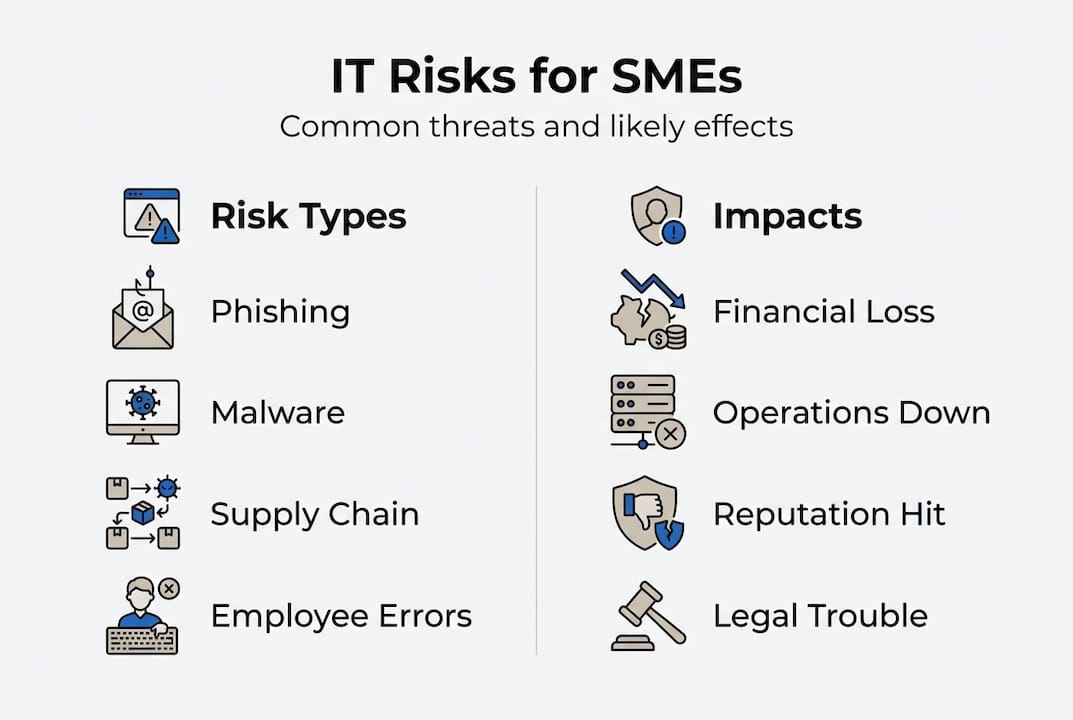
One category that Albanian businesses tend to underestimate is supply chain risk. This is when an attacker targets one of your vendors or software providers to reach you indirectly. Supply chain attacks hit 62% of Albanian businesses in 2026, making it one of the fastest-growing threat categories in the country.
Pro Tip: Ask every third-party vendor or software provider you work with about their own security practices. If a supplier gets breached and you share data with them, your business is exposed too.
How IT risks impact small and medium businesses
Knowing the types of IT risks matters, but understanding what they actually do to your business makes the urgency real. The effects show up in three main areas: money, operations, and trust.
Financial impact is the most immediate. A ransomware attack can demand anywhere from a few hundred to tens of thousands of dollars. Recovery costs, including IT support, lost productivity, and potential legal fees, add up fast. Breach costs for SMBs range from $140,000 to $4.44 million globally, depending on the size of the business and the severity of the attack.
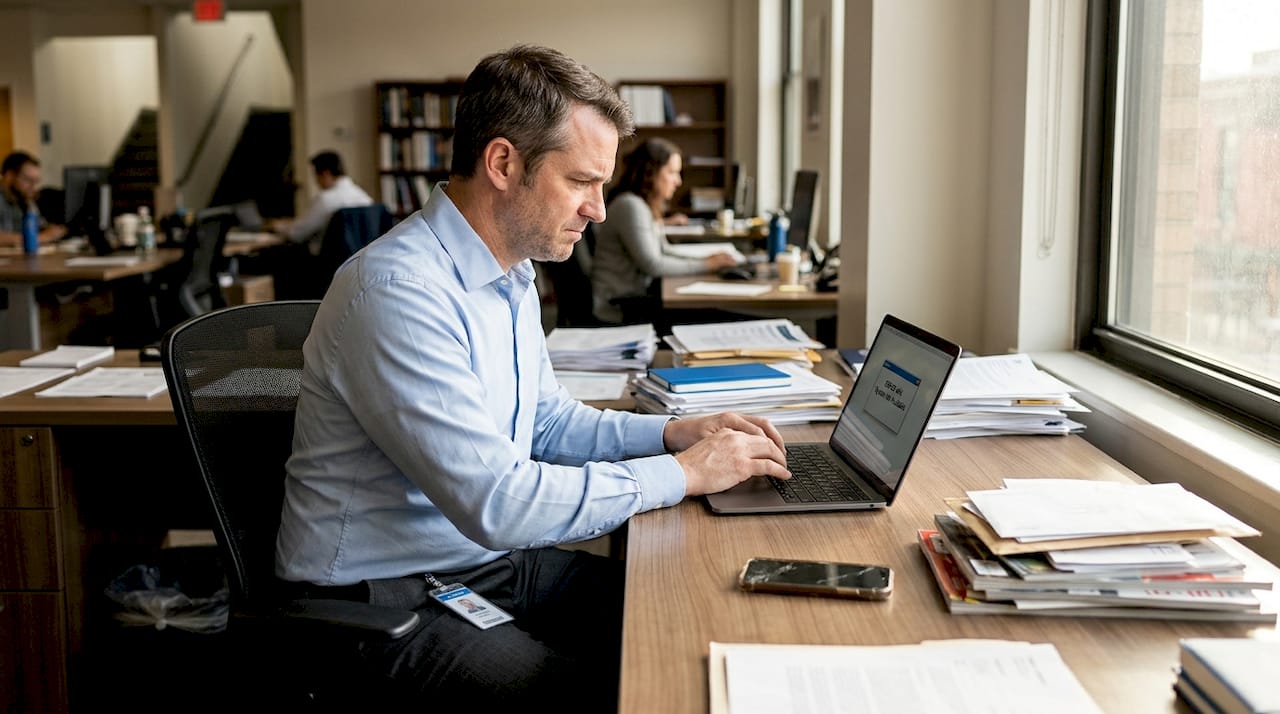
Operational impact hits your day-to-day work. When systems go down after a ransomware attack, staff cannot access files, process orders, or communicate with clients. Even a few hours of downtime can mean missed deadlines, canceled orders, and frustrated customers.
Reputational impact is harder to measure but often the most lasting. If your customers find out their personal data was exposed, rebuilding that trust takes months or years. Some businesses never fully recover.
Here is a snapshot of what Albanian SMBs are dealing with:
| Attack type | Estimated frequency | Average cost per incident |
|---|---|---|
| Supply chain attack | 62% of businesses targeted | $45,000 |
| Phishing | Very common | Varies, often $5,000 to $50,000 |
| Ransomware | Increasing | $10,000 to $200,000+ |
| Data breach | Moderate | $140,000+ |
Key statistic: 59% of SMEs experienced a cyber attack in the past 12 months. That means if you have not been hit yet, the odds are not in your favor.
- Downtime after an attack averages 21 days for small businesses
- Regulatory fines for data breaches can reach 2% to 4% of annual revenue
- Customers are 65% less likely to return after a known data breach
How to identify and reduce IT risks in your business
The good news is that reducing IT risks does not require a massive budget. It requires a clear process, consistent habits, and the right priorities.
Step-by-step approach for Albanian SMEs:
- Inventory your assets. List every computer, server, mobile device, software system, and data source your business uses.
- Identify your threats. For each asset, ask: what could go wrong? Who might want to attack this? What happens if it fails?
- Assess your current controls. Do you have antivirus software? Backups? Password policies? Identify the gaps.
- Prioritize by impact. Focus first on the risks that could shut your business down or expose customer data.
- Implement controls. This could mean installing a firewall, enabling two-factor authentication, or setting up automated backups.
- Train your staff. Human error is a top cause of breaches. Employee cybersecurity training has reached 65% of Albanian employees, but regular refreshers are still rare.
Do's and don'ts for Albanian SMEs:
- Do use strong, unique passwords and a password manager
- Do back up your data daily, with at least one copy stored offsite or in the cloud
- Do update software and operating systems as soon as patches are released
- Don't ignore vendor security; ask suppliers about their own IT practices
- Don't rely on a single layer of security; layer your defenses
- Don't wait for an incident to create a response plan
"A phased approach beats a perfect plan that never gets implemented. Start with the basics, build from there, and review your risks at least once a year."
Pro Tip: Set a calendar reminder to refresh your IT risk assessment every 6 to 12 months. Your business changes, and so do the threats targeting it.
A local perspective: What most guides miss about IT risks in Albania
Most global cybersecurity guides are written for businesses with dedicated IT departments, large budgets, and English-speaking staff. That is not the reality for most Albanian SMEs. Applying a Fortune 500 framework to a 15-person business in Durrës does not work.
The Albanian SME challenges are specific: limited IT budgets, staff who wear multiple hats, and a local market where cybersecurity awareness is still developing. Buying expensive enterprise software or hiring a full-time security analyst is simply not realistic for most businesses here.
What actually works is a phased, staff-inclusive approach. Start with the basics that cost little or nothing: strong passwords, regular backups, and a clear policy for what to do if someone receives a suspicious email. Then build from there as your budget and knowledge grow.
The businesses we see recover best from IT incidents are not the ones with the most tools. They are the ones where staff know what to do, where data is backed up consistently, and where someone is responsible for IT decisions. That is achievable for any Albanian SME, regardless of size or budget.
Need help managing IT risks? Blad IT Solutions can support your business
Understanding IT risks is the first step. Acting on that knowledge is where most businesses get stuck, especially without in-house IT expertise.
Blad IT Solutions works with small and medium-sized businesses across Tiranë and Durrës to identify vulnerabilities, set up reliable defenses, and create practical plans that fit real budgets. Whether you need a full IT security audit, help setting up backups, or just want to know where your biggest risks are, we are here to help. Explore the full range of Blad IT Solutions services or check out our IT tips for Albanian businesses to get started with practical, local advice.
Frequently asked questions
What is an IT risk in simple terms?
An IT risk is any potential event that can harm your company's computer systems, data, or business operations. These threats affect confidentiality, integrity, or availability of your information and systems.
How common are IT risks for Albanian SMEs?
Very common. In 2026, 62% of Albanian businesses were targeted in supply chain attacks, and 59% of SMEs reported a cyber incident in the past year.
What are the biggest IT risks for small businesses?
The main risks are malware, phishing, employee mistakes, and supply chain attacks. Low cyber hygiene and a lack of formal policies make these risks worse for most Albanian SMEs.
How much can an IT attack cost a business?
A typical breach can range from $45,000 for a supply chain incident to over $4.4 million for a major breach, based on global SMB breach data.
How can small businesses reduce IT risks?
Start with employee training, a full asset inventory, regular backups, and a written response plan. 65% of Albanian employees have received some cybersecurity training, but consistent practice and updated policies matter just as much.